
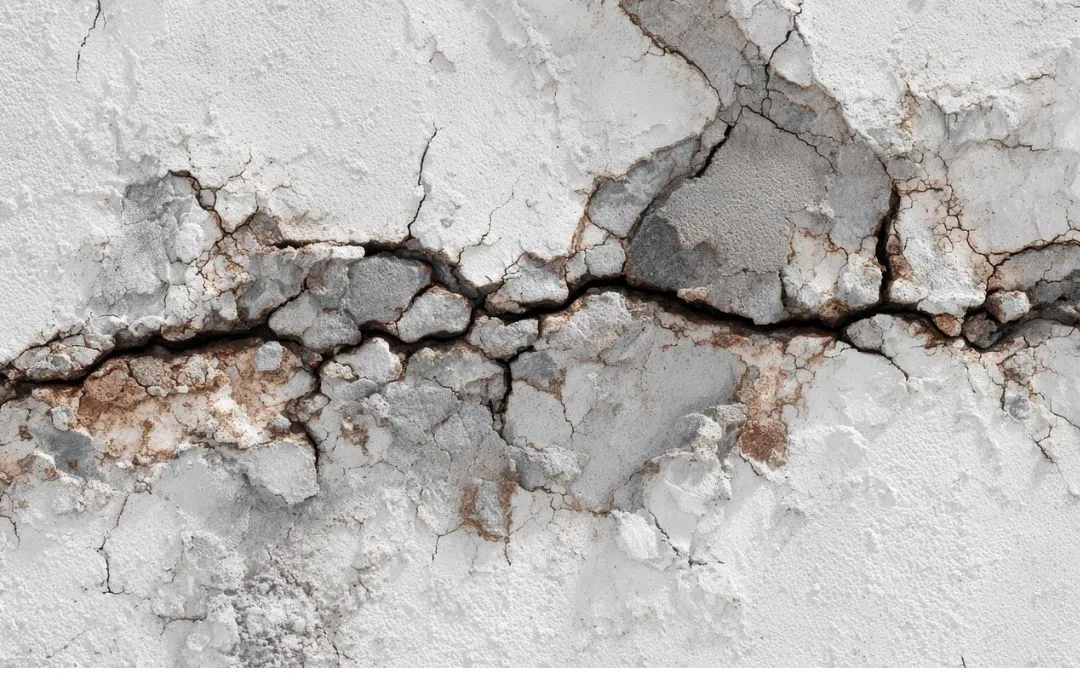
The discovery of a crack in your foundation may have you automatically wondering about the stability of your home. The good thing is that foundation cracks are quite common and should not raise any alarm bells.
There is natural shrinking and settling of concrete as a building ages. Small hairline cracks may be formed, which are harmless. But there are cracks such as horizontal cracks, wide cracks, and those with door sticking and moisture problems.
The key is knowing what to look for.
Narrow and stable hairline cracks are not a problem. However, you should have your foundation inspected by a professional when you observe:
- Horizontal and step cracks
- Cracking that keeps on widening
- Bow walls and leaking water into the basement
- Stuck doors and/or windows
This article provides information on the various types of foundation cracks, their meanings, and reasons for seeking professional help.
Quick Answer: Which Foundation Cracks Are Serious?
The most worrisome cracks are the horizontal cracks that are widening, water seepage cracks, and those that are making walls move inward.
A simple way to assess all cracks would be to consider five key factors:
Direction + Width + Location + Movement + Other Symptoms
Here are some quick guidelines on what certain types of cracks signify:
- Vertical Cracks: Vertical cracks that are small and stable are fairly common and are often caused by normal shrinkage of concrete.
- Diagonal Cracks: Usually indicate differential settlement where one part of the house settles faster than another.
- Stair-Step Cracks: These are common in brick or block walls, and they indicate unequal movement of the foundation.
- Horizontal Cracks: These cracks are usually the most serious of all, and they indicate excessive hydrostatic pressure or soil movement against basement walls.
- Leaking/Widening Cracks: These cracks allow water to leak through them, and they are widening over time. This kind of crack needs to be assessed even if the direction is different.
While it is the crack itself that is important, it is the cause that makes all the difference.
Foundation Crack Severity Guide
Use this quick guide to match what you see on your walls with its potential risk level and recommended next steps.
What You See | What It May Indicate | What To Do |
Stable hairline crack | Concrete shrinkage or minor movement | Monitor and inspect periodically |
Narrow vertical crack | Concrete curing shrinkage or minor settlement | Monitor for any future changes |
Diagonal crack | Differential settlement or house movement | Consider professional evaluation |
Stair-step crack | Masonry wall movement or uneven settlement | Have evaluated, especially if growing |
Horizontal basement wall crack | Lateral soil pressure or hydrostatic pressure | Professional evaluation highly recommended |
Crack that is widening | Active, ongoing foundation movement | Schedule a professional inspection |
Crack with water intrusion | Moisture or yard drainage issue | Evaluate foundation and water management |
Crack with wall bowing | Severe structural pressure or movement | Prompt professional evaluation required |
Crack with uneven floors/sticking doors | Broader foundation settlement issue | Schedule a full professional assessment |
This table is a screening guide, not a structural diagnosis. The same crack pattern can have different causes depending on the home’s construction, soil, drainage, age, and other conditions.
What Causes Foundation Cracks?
Foundation cracks can develop for many reasons. Filling the visible crack without understanding why it formed can leave the underlying problem unresolved.
Concrete Shrinkage
Change in the concrete as a result of curing and drying is a natural occurrence that results in shrinkage cracks, mostly in newer concrete.
Cosmetic cracks do not need further attention, but other cracks that continue to grow or allow water to pass through them require further consideration.
Normal House Settling
Homes can experience some degree of settlement as the structure and supporting soil adjust.
Minor, uniform settlement does not necessarily mean that a foundation is failing.
The concern is differential settlement, where different parts of the structure move by different amounts.
This can create diagonal or stair-step cracks and may also cause:
- Uneven floors
- Sticking doors
- Windows that become difficult to open
- Gaps around doors or windows
- Cracks in brick or masonry
- Separation between walls and ceilings
Soil Movement
The soil surrounding and supporting your foundation plays an important role in the condition of your home.
Moisture changes may also affect soil conditions. Excessive rainfall, drainage problems, prolonged drought, erosion, and other environmental conditions may lead to foundation movement.
If the soil loses its support or puts extra pressure on the foundation, it may cause foundation cracks.
Hydrostatic Pressure
Soil moisture surrounding the basement creates pressure against the walls of the foundation.
If there is poor drainage near your house, the soil moisture will create extra pressure against your foundation.
It is especially dangerous if you see horizontal cracks near the basement walls or cracks together with foundation bowing.
Poor Drainage
The condition of your gutters, downspouts, grading, and drainage systems affects the moisture that reaches your foundation.
Problems such as:
- Downspouts discharging too close to the house
- Ground sloping toward the foundation
- Standing water near foundation walls
- Poor yard drainage
- Clogged gutters
can contribute to excessive moisture around the foundation.
Improving drainage can be an important part of addressing water-related foundation problems.
Construction or Material Conditions
Foundation cracking can also be related to construction conditions, materials, soil preparation, foundation design, previous repairs, or modifications to the home.
For older houses, the original foundation construction and decades of changes to the property should also be considered when evaluating cracks.
7 Common Types of Foundation Cracks
The direction and pattern of a crack can provide useful clues about what may be happening.
1. Hairline Foundation Cracks
Hairline cracks are extremely narrow cracks that can occur in concrete as it cures and shrinks.
A stable hairline crack without water intrusion, displacement, or other warning signs is generally less concerning than a crack that is actively changing.
However, don’t assume that every hairline crack is automatically harmless.
Monitor it for:
- Increasing width
- Increasing length
- Water intrusion
- Displacement
- Nearby cracks
- Changes in the surrounding wall
If the crack changes, have the condition evaluated.
2. Vertical Foundation Cracks
Vertical cracks typically run up and down a foundation wall.
Some narrow, stable vertical cracks can result from concrete shrinkage or minor settlement.
The important question is whether the crack is changing.
A vertical crack becomes more concerning when it:
- Gets wider
- Allows water into the basement
- Shows displacement
- Appears alongside several new cracks
- Is accompanied by uneven floors or sticking doors
- Continues to grow over time
A vertical crack should therefore be evaluated in context rather than judged by direction alone.
3. Horizontal Foundation Cracks
Horizontal cracks in foundation or basement walls deserve particular attention.
They can be associated with lateral pressure from surrounding soil or hydrostatic pressure.
A horizontal crack becomes especially concerning when you also notice:
- Bowing walls
- Bulging walls
- Leaning walls
- Increasing crack width
- Water intrusion
- Cracked masonry
- Visible displacement
Do not simply seal a horizontal crack and assume the problem is solved.
The wall and surrounding conditions should be evaluated to determine whether there is an underlying structural issue.
4. Diagonal Foundation Cracks
Diagonal cracks may be an indicator of differential settlement or movement.
These cracks can occur at the corners of structures or windows and doors.
A smaller and stabilized diagonal crack does not indicate serious problems with the structure’s foundation.
On the contrary, any widening of diagonal cracks or cracks with other symptoms, such as uneven flooring or exterior cracks, requires professional attention.
5. Stair-Step Foundation Cracks
Stair-step cracks follow the mortar joints of brick or concrete block walls.
They can indicate differential movement or settlement.
Look for changes such as:
- The crack becoming wider
- The crack extending farther across the wall
- Water entering through the crack
- Separation or displacement of masonry
- Additional cracks appearing nearby
Stair-step cracking should not automatically be classified as either “safe” or “dangerous” without considering the complete pattern.
6. Foundation Floor Cracks
Foundation and basement floor cracks can occur for several reasons, including concrete shrinkage and settlement.
Some are relatively minor, while others may indicate movement or water-related problems.
Pay closer attention when a floor crack:
- Has vertical displacement
- Continues into the foundation wall
- Is getting wider
- Allows water to enter
- Appears with uneven floors
- Is accompanied by other foundation cracks
The location and relationship of the floor crack to the rest of the foundation are important.
7. Cracks That Keep Coming Back
When cracks continuously appear after repairing them, this should receive extra consideration.
Such cracks are a sign that movement or something else has not yet been resolved.
If the problem persists after the repair, do not just put more sealant on it.
Figure out why the crack continues to form.
How to Tell If a Foundation Crack Is Serious
Homeowners often search for a specific measurement that tells them whether a foundation crack is dangerous.
Width matters, but it is not the only factor.
A better evaluation considers several characteristics.
1. Is the Crack Getting Wider?
An actively widening crack is more concerning than a stable crack.
Take a photograph of the crack and record its approximate width and location.
Check it periodically for changes.
If the crack is clearly progressing, schedule a professional evaluation.
2. Is the Crack Horizontal?
Horizontal cracks in walls in basements can be a sign that there is sideways pressure exerted by soil or water.
When the horizontal crack appears along with bowing in the wall, action must be taken.
3. Is the Wall Bowing?
Look along the wall from different angles.
Does the wall appear:
- Curved?
- Bulged?
- Learning?
- Pushed inward?
A crack combined with visible wall movement is more concerning than an isolated hairline crack.
4. Is Water Coming Through the Crack?
Water entering through a foundation crack can indicate a waterproofing or drainage problem.
Look for:
- Damp areas
- Water stains
- Efflorescence
- Active dripping
- Mold or musty odors
- Wet basement floors
Even when the crack is not structurally serious, persistent water intrusion should be addressed.
5. Are Doors or Windows Sticking?
There may be indications in various parts of the house.
If multiple doors or windows that were once functioning smoothly all of a sudden seem to have become difficult to either open or close, there may be signs of movement.
6. Are There Uneven Floors?
Obvious signs of slopes or uneven floors along with foundation cracks may suggest that the issue is deeper than just surface cracking.
7. Are There Exterior Cracks?
It is important not to check inside the basement.
One needs to check outside in brick, block, concrete, siding and window/door areas.
Is a 1/4-Inch Foundation Crack Serious?
A frequently searched question is whether a 1/4-inch foundation crack automatically means serious damage.
The answer is: not necessarily, but it deserves evaluation when combined with other warning signs.
Crack width is useful information, but it should not be treated as a universal diagnosis.
A wider crack that has remained stable may have a different cause than a smaller crack that is actively growing.
Consider:
- Is it getting wider?
- Is there vertical displacement?
- Is it horizontal?
- Is water entering?
- Is the wall bowing?
- Are there other cracks?
- Are doors or windows sticking?
- Are floors uneven?
The combination of these signs is much more useful than width alone.
Are Hairline Foundation Cracks Normal?
Indeed, tiny hairline cracks that are less than (1/6 inch or 1.5 inch mm) in width are quite common and usually entirely normal.
Concrete is known to shrink while drying due to the curing process, and it may leave such cracks, even in a newly constructed building. Minor settlement of the house structure may also be a cause of such cracks.
When a Hairline Crack Is Safe:
A hairline crack is generally harmless if it is:
- Vertical or diagonal in direction
- Completely dry with no water seepage
- Flat (meaning one side isn’t sticking out further than the other)
- Stable and not changing over time
When to Re-Evaluate a Hairline Crack?
While most hairline cracks are purely cosmetic, you shouldn’t ignore them entirely. Schedule an inspection if you notice:
- The crack begins to widen beyond 1/ 6 inch
- Rainwater or dampness starts seeping through the gap
- The crack lengthens significantly up the wall or floor
- You spot multiple new hairline cracks appearing in the same area
Takeaway: A stable, dry hairline crack is just your home aging naturally. Mark the ends of the crack with a pencil and date it. if it stays the same size for 6 to 12 months, you can rest easy.
Can Foundation Cracks Cause Water Problems?
Absolutely! It doesn’t matter if there is a minuscule hairline crack; this allows the entrance of groundwater directly into the home’s basement or crawl space in case of rainfall, when the ground around the property becomes saturated.
There are multiple potential problems in case water comes through foundation cracks:
- Wet Basement Walls: Accumulation of moisture on the basement floor that destroys carpeting, drywall, and other items being kept there.
- Efflorescence: The appearance of white, dusty mineral deposits on basement walls when water evaporates through the concrete.
- Mold and Mildew Formation: Constant moisture presence causes the growth of mold, which deteriorates the indoor air quality of a home.
- Musty Odor and Excessive Humidity: Moisture makes basements wet and stinky, which puts additional pressure on your home’s HVAC system.
It is not enough to seal the crack in order to stop water leakage. The solution to the problem requires addressing external water issues like moving downspouts, cleaning gutters, and grading soil so that water won’t come near foundation walls anymore.
Foundation Cracks vs. Foundation Settlement
Foundation cracks and foundation settlement are not the same thing.
A foundation crack is a visible symptom.
Settlement is one possible underlying cause.When a portion of a home settles differently from another portion, it can produce diagonal or stair-step cracking.
Other settlement symptoms can include:
- Sloping floors
- Gaps around windows and doors
- Sticking doors
- Cracks in brick or masonry
- Separation between walls and ceilings
- Uneven floor elevations
If several cracks are observed at once, it is wise to have a professional conduct a foundation inspection so that the proper fix can be made.
What Should You Do When You Find a Foundation Crack?
Seeing a crack when one is not expected can cause panic, but the following steps will assist you in determining how to assess it properly.
These seven easy steps should be followed:
Step 1: Capture Reference Images
Take pictures of the crack along with a ruler/coin to measure its width and take another image to determine the position of the crack on the wall.
Step 2: Note Down Date & Location
Put down the date and place where you found the crack (such as “North Wall Basement, near window frame”) along with your initial measurements.
Step 3: Identify Any Indicators of Water Damage
Remember to examine the area for any indications of water damage such as leakage, wet spots or powdery substances called efflorescence.
Step 4: Examine Wall Alignment
Examine the alignment of the concrete wall by looking at the wall from its side.
Step 5: Conduct Full House Inspection
Go around your house and try to locate other indications of damage:
- Doors or windows that stick or jam
- New diagonal cracks in interior drywall above doorframes
- Gaps between wall trim, baseboards, or ceiling seams
- Exterior brick or masonry stair-step cracks
Step 6: Track the Progress (The Pencil Method)
Mark the cracks on either side with a pencil line and date them. Check the crack every month; if it exceeds the pencil lines or grows larger, it is definitely progressing.
Step 7: Arrange for Structural Inspection in Case of Red Flags
If the crack is horizontal, leaking moisture, more than 1/4 inch wide, or causing wall buckling, seek professional structural inspection instead of doing repairs yourself.
Should You Repair a Foundation Crack Yourself?
It depends on the type of crack and what is causing it.
While a DIY approach can work for minor cosmetic issues, simply sealing a crack does not fix the underlying force that created it in the first place.
When DIY Repair Is OK:
You can usually tackle the repair yourself if:
- This type of crack is vertical or hairline (less than 1/16-inch wide).
- It is totally stable and has not moved in several months.
- The objective here is to stop water entry or drafts.
- Simple Fixes That You Can Try At Home: Epoxy injection system, polyurethane sealant, or silicone caulk.
When You Should NOT Do It Yourself:
Don’t consider a simple home repair job for a crack caused by:
- Continued Foundation Settlement: Significant soil movement below the foundation.
- Hydrostatic Pressure: Moist soil pushing against the walls of the basement.
- Bowing or Displacement of Structural Wall: Leaning wall.
- Poor Yard Drainage: Rainwater consistently accumulating near exterior walls.
Using caulk or hydraulic cement to fill a structural crack is like putting a Band-Aid on a serious wound. The problem of soil or hydrostatic pressure will be present, and the foundation will continue moving, and so will the crack.
How Are Serious Foundation Cracks Repaired?
There is no single repair method for every foundation crack.
The appropriate solution depends on what is causing the movement or damage.
Foundation Stabilization
When settlement or foundation movement is present, specialized stabilization systems may be appropriate.
This can include:
- Helical piers
- Push piers
- Slab piers
Wall Reinforcement
When basement walls are experiencing lateral movement, reinforcement may be considered.
This can include:
- Steel I-beams
- Carbon fiber reinforcement
- Helical tie-backs
Crack Repair
Some cracks can be repaired using sealants or injection systems, but only when appropriate for the cause.
Waterproofing and Drainage
When water is contributing to foundation problems, solutions may include:
- Improved grading
- Downspout management
- Drainage systems
- Sump pumps
- Interior or exterior waterproofing
Why Foundation Cracks Should Be Evaluated Differently in Older Virginia Homes
Virginia has many older and historic homes, and their foundation systems can differ significantly from newer construction.
An older home’s foundation may involve different materials, construction methods, previous repairs, and long-term soil and drainage changes.
Copper Fox Foundation Solutions works with residential foundations across Virginia, including historic homes in Lynchburg that can be more than 150 years old.
For older homes, the goal is to understand the true cause of cracking before selecting a repair approach.
How Drainage Can Affect Foundation Cracks in Virginia
Water management can be one of the most important factors in the prevention and treatment of foundation cracks. Virginia sees a lot of rain every year, and when the water doesn’t have anywhere to go, it settles down against your basement or crawlspace walls.
The water-saturated soil in Virginia creates high hydrostatic pressure and causes foundation wall failures and cracks.
Before paying for costly structural wall repairs, perform a quick Outdoor Drainage Inspection around your home:
- Gutters & Downspouts: Clean any blocked gutters, and ensure that the downspout discharge lines lead at least 5 to 10 feet away from your house foundation.
- Grading: Make sure that the ground near your house is graded at least 6 towards the house foundation in the first10 feet away from the house.
- Standing Water & Pooling: Keep an eye on any wet patches on your grass, muddy puddles, or any standing water near the house foundation within 24 hours after heavy rainfall.
- Erosion & Washouts: Check for any deep channels created by the rainwater near the walls of your house, which is an indication of improper runoff.
Tip for Homeowners: Fixing the bad roof drainage and slope of soil can solve as much as 80% of the water pressure on foundations.
When Should You Call a Foundation Repair Professional?
Not all cracks necessarily require immediate action, but ignoring certain red flags may cost you more in the long run.
It would be prudent to book an inspection of your foundation if you see any of the following issues:
- Structural Wall Cracks: Horizontal cracks, diagonal cracks greater than 1/4 inch, and mortar cracks in stair-step fashion that keep developing.
- Misaligned Wall: Wall bowing, bulging, and leaning.
- Water Intrusion: Moisture leakage, puddle formation, and heavy mold growth or efflorescence.
- Jutting Wall: Cracks where one wall protrudes more compared to the other wall.
- Cracks that Resurface: Cracks that tend to reappear despite being repaired earlier.
- Symptoms Across Your Whole House: Floors that tilt, stuck doors and windows, gaps at trim and separating masonry work outdoors.
Inspection will help put your mind at rest. You will be informed whether you need inspection of your foundation on a regular basis, waterproofing or strengthening.
Foundation Crack Inspection: What a Professional Looks For
When a specialist inspects your house, he does not limit his analysis to the visible aspects of the crack itself. A full professional foundation inspection considers the entire system of your house’s structural integrity:
- Crack Description & Formation Pattern: Assessing the crack formation direction (horizontal, vertical, diagonal, or stair-step), actual width, depth, and whether it is expanding.
- Wall Position & Stability: Checking for wall movement, leaning, or bulge with the help of special laser measuring devices.
- Moisture & Hydrostatic Pressure: Detecting any active moisture infiltration, signs of moisture damage such as water stains, mold, efflorescence, etc.
- Evaluation of Water Flow Around Your Foundation: Assessment of gutters, downspouts, soil grading slope, and lawn drainage to evaluate how water flows around your foundation.
- Structural Symptoms Inside Your Home: Examination of upstairs floors to look for floor slope, sticking doors, sticking windows, and drywall cracks.
- Soil & Foundation Evaluation: Understanding what kind of soil you have (for example, expansive clay soil found in Virginia), and the structure of your foundation (basement, concrete slab, crawlspace, or masonry).
What You Can Expect from This: A complete inspection will help identify what your house needs in order to remain stable.
What Not to Do When You Find a Foundation Crack
When dealing with foundation issues, avoiding common mistakes is just as important as taking the right repair steps. Here is what you should NEVER do:
- Do Not Underestimate Cracks: Overlooking even small cracks may cause them to grow into serious problems and become very costly for you.
- Do Not Go Into a Panic and Assume the Foundation Is Failing: Each crack doesn’t need to be an indication that your house is about to collapse.
- Do Not Evaluate Risk Level Based on Crack Width: A narrow horizontal crack is much more threatening than a wide vertical crack. The position and movement are much more important factors than the size.
- Do Not Keep Applying Layer Upon Layer of Caulk: This does not work because the movement in the structure continues.
- Do Not Ignore the Problem of Water Leaks: The leaks from the crack cause decay of the concrete structure and the wood, plus the growth of mold inside your house.
- Do Not Delay Once the Walls Begin to Sag: Fixing the foundation when it is already in trouble is easier and more economical than attempting to fix the sags in the walls.
Basic Principle: Always make sure you understand the cause of the crack before trying to cover it.
Frequently Asked Questions About Foundation Cracks
What type of foundation crack is most serious?
Horizontal foundation cracks in basement walls are usually the more severe ones, particularly if accompanied by bowing and displacement.
Are vertical cracks serious?
Not necessarily, but they become a matter of concern if they grow in width or show any leakage or signs of movement.
Are stair-step cracks serious?
Sometimes, because they may indicate settlement or movement.
Is a hairline crack normal?
Certainly, due to shrinkage, but it still requires monitoring.
Can foundation cracks get worse?
They can, particularly if the source of the problem continues to exist.
Can foundation cracks cause leaks?
They can, because they provide access for water to seep through.
Should I seal a foundation crack?
It is recommended to seal only a stable, non-structural crack; otherwise, one needs to eliminate the underlying cause first.
How do I know if my foundation is settling?
By cracks accompanied by other signs such as uneven floors, stuck doors, etc.
Can foundation cracks be repaired permanently?
Sure, but the underlying cause needs to be eliminated first.
Final Takeaway
While not all foundation cracks are emergencies, any changes in their appearance or symptoms should be evaluated carefully.
A stationary or thin vertical crack might be nothing to worry about. Still, horizontal cracks, widening cracks, stair-stepping cracks, displacement, bowing walls, water penetration, and other symptoms altogether should raise red flags.
Always assess your cracks according to:
Direction → Location → Width → Movement → Water → Displacement → Other symptoms
When in doubt, contact professionals to find out whether you need monitoring, repairing, waterproofing, or stabilization.
Copper Fox Foundation Solutions specializes in foundation repair and stabilization throughout Virginia, and we will help homeowners uncover the true cause behind their foundation cracks and choose the appropriate course of action.